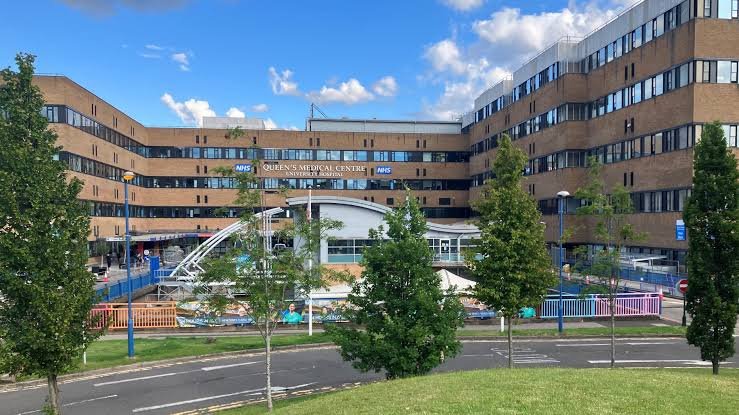
Many assume that winter pressures on the NHS are a predictable annual challenge, but the scale of the crisis at Nottingham’s hospitals in late 2023 and early 2024 was anything but routine. The Nottingham and Nottinghamshire Integrated Care Board (ICB) declared a critical incident on 3 January 2024, following weeks of extreme demand that pushed emergency departments to their limits. This article examines what happened, why it occurred, and what it means for patients and staff.
How the Emergency Pressures Affected Patients Across Nottinghamshire
The impact of the nottingham nhs trust emergency pressures was felt most acutely in the region’s two main hospital trusts. Nottingham University Hospitals NHS Trust, which runs Queen’s Medical Centre and City Hospital, and Sherwood Forest Hospitals NHS Foundation Trust, which operates King’s Mill Hospital, both reported record-high attendances. Ambulance handover delays exceeded 12 hours for some patients in January 2024, meaning paramedics could not transfer patients to A&E staff promptly. This created a bottleneck that affected the entire emergency care pathway. Public records covering this story are gathered in Critical incident stood down at Nottingham NHS trust – BBC News
Patients waiting for beds in corridors became a common sight. The ICB reported that over 1,000 patients waited more than 12 hours in A&E across Nottinghamshire in December 2023 alone. The situation prompted the ICB to urge the public to use NHS 111 and local pharmacies instead of attending A&E for non-emergency conditions. For those with genuine emergencies, the message was clear: come to hospital only if absolutely necessary.
Staff and Public Reactions to the Ongoing Crisis
Healthcare workers described the period as one of the most challenging in recent memory. Staff shortages, combined with a surge in flu admissions, stretched teams to breaking point. Nurses and doctors reported working double shifts and skipping breaks to manage the influx. The public, meanwhile, expressed frustration on social media and in local news comments, with many sharing stories of long waits and cancelled operations. Some praised the dedication of NHS staff, while others questioned whether the system was adequately funded.
The trust’s own data showed that the nottingham nhs trust emergency pressures were not a one-off event. In 2023, the trust had already declared multiple critical incidents due to winter pressures. The Care Quality Commission (CQC) rated Nottingham University Hospitals as “requires improvement” in 2023, citing concerns over emergency care and staffing levels. This rating added to the sense of urgency among local leaders and the public alike.
Background: The Timeline of Critical Incidents and Declared Emergencies
The first major warning came on 18 December 2023, when Nottingham University Hospitals NHS Trust declared a “business continuity incident” due to similar pressures. This was followed by the ICB’s critical incident declaration on 3 January 2024, which was stood down on 8 January 2024 after demand eased slightly. The critical incident status allowed the trusts to implement emergency measures, such as cancelling non-urgent surgeries and redeploying staff to the busiest areas.
The underlying causes were multiple. A spike in flu cases, combined with ongoing staff vacancies and a lack of social care capacity to discharge patients, created a perfect storm. The ICB also noted that many patients arriving at A&E could have been treated elsewhere, such as at a GP surgery or pharmacy. The trust’s own data indicated that a significant proportion of attendances were for conditions that did not require emergency hospital care.
| Date | Event | Trust / Body |
|---|---|---|
| 18 Dec 2023 | Business continuity incident declared | Nottingham University Hospitals NHS Trust |
| 3 Jan 2024 | Critical incident declared | NHS Nottingham and Nottinghamshire ICB |
| 8 Jan 2024 | Critical incident stood down | NHS Nottingham and Nottinghamshire ICB |
What Is Confirmed and What Remains Unverified About the Pressures
The CQC rating of “requires improvement” for Nottingham University Hospitals is also a matter of public record. However, some details remain unverified. For instance, while local media reported that over 1,000 patients waited over 12 hours in A&E in December 2023, the exact figure has not been independently audited. Similarly, the precise number of flu admissions that contributed to the nottingham nhs trust emergency pressures has not been released in a detailed breakdown by the trust.
Another area of uncertainty is the long-term impact on patient outcomes. While anecdotal reports of harm exist, no official study has yet quantified the number of avoidable deaths or complications directly linked to the delays. The trust has committed to reviewing its response, but the findings have not been published as of early 2024.
Frequently Asked Questions
How many critical incidents did Nottingham NHS trusts declare in the 2023-2024 winter?
Nottingham University Hospitals NHS Trust declared a business continuity incident on 18 December 2023, and the ICB declared a critical incident on 3 January 2024. The critical incident was stood down on 8 January 2024. These were the two main declarations during that period.
Why did the emergency pressures become so severe in Nottingham?
A combination of high flu admissions, staff shortages, and a lack of social care capacity to discharge patients created a bottleneck. Many patients also attended A&E with conditions that could have been treated elsewhere, adding to the demand.
Is it true that some patients died because of the delays?
The trust has pledged to review its response, but findings are not yet public.
When did the critical incident start and end?
The ICB declared the critical incident on 3 January 2024 and stood it down on 8 January 2024. The earlier business continuity incident at Nottingham University Hospitals began on 18 December 2023 and was resolved before the ICB’s declaration.
How does the situation at Queen’s Medical Centre differ from King’s Mill Hospital?
Both hospitals faced similar pressures, but Queen’s Medical Centre is a major trauma centre and sees higher volumes of emergency patients. King’s Mill Hospital, run by a different trust, also experienced record attendances but had a smaller overall capacity.