Understanding Curling Dynamics
The science of curling is rooted in several fundamental principles of physics that govern the motion of the curling stone on the ice. Key concepts such as friction, momentum, and the stone’s design come into play, influencing its trajectory significantly. As a player delivers the stone, it glides across the ice surface, primarily due to its initial momentum and the forces acting upon it.
When a curling stone is released, it experiences kinetic friction with the ice. This friction slows down the stone gradually, altering its speed as it travels. The nature of this friction can be influenced by various factors, including the temperature and texture of the ice surface. Interestingly, curling stones are designed with a concave bottom, which minimizes contact with the ice. This unique design reduces the frictional force acting on the stone, allowing for a smoother glide and the ability to travel further upon release.
Additionally, the initial angle and rotation applied to the stone are crucial in determining its trajectory. The momentum generated at the moment of delivery impacts how the stone interacts with the ice. As the stone moves, its rotational motion affects the friction as well. Understanding these dynamics lays the groundwork to explore how brushes contribute to modifying the stone’s path.
Brushes in curling serve a distinct function; they actively influence the interaction between the stone and the ice. By sweeping the ice in front of the moving stone, players can manipulate the frictional forces in real-time. This phenomenon not only aids in increasing the distance of the stone—by lowering the friction—but also impacts its path, enabling curlers to adjust as needed based on their strategy and opponents’ movements. The interplay between brushing and the established principles of curling dynamics is essential to grasp for enhanced performance in competitive play.
The Role of Brushes in Curling
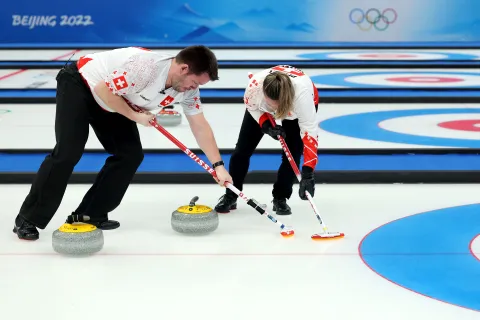
In the sport of Olympic curling, brushes play a crucial role in influencing the trajectory of the stone as it glides across the ice. Players utilize brushes primarily to modify the stone’s path by altering the surface of the ice in front of it. The sweeping technique employed by curlers is integral to maintaining optimal control over the stone’s speed and direction.
Brushes typically consist of a flexible handle and a bristle or fabric head which is designed to create a minimal amount of resistance against the stone. Two main types of brush heads are commonly in use: synthetic fabric heads and traditional horsehair heads. Each type has its unique advantages, with synthetic brushes providing greater durability and modified friction levels, allowing for more effective sweeping during gameplay. The choice of materials significantly affects how do brushes affect the stone’s path in Olympic curling.
The timing and frequency of brushing are critical factors that influence gameplay. As the stone travels down the ice, the lead and second players strategically sweep in front of it to increase its distance. This action reduces the friction between the stone and the ice, thus allowing it to travel farther and more straight. Furthermore, brushing can also impact the curl—the degree to which the stone deviates from a straight line—by creating a variable surface that can either enhance or diminish the stone’s rotation. Understanding when to initiate brushing, alongside the techniques employed, is vital for success in competitive curling.
In conclusion, brushes are indispensable tools in curling that significantly impact how do brushes affect the stone’s path in Olympic curling. Their strategic use allows players to harness greater control over the stone, thereby shaping the dynamics of the game itself.
How Do Brushes Affect the Stone’s Path?
In Olympic curling, the subtle yet significant role of brushes in affecting a stone’s path cannot be overstated. When curlers brush the ice in front of a moving stone, they create friction that alters the stone’s experience as it slides. This interactive effect is crucial because it can modify the stone’s velocity and trajectory, ultimately influencing the game’s outcome.
One of the primary functions of brushing is to reduce friction between the stone and the ice. By doing so, it increases the stone’s speed, allowing it to travel further than it might without brushing. There is a correlation between the intensity of the brushing and the extent to which the speed is altered. For instance, aggressive brushing can propel the stone past crucial distances, strategically positioning it for optimal placement.
Moreover, brushing serves another vital purpose: it affects the degree of curl, or rotation. As the stone glides across the ice, brushing alters the surface conditions right in its path. The heat generated by the brushes can melt the top layer of ice, creating a smoother surface, which can lessen the stone’s propensity to curl. Curlers must adequately gauge how much to brush, depending on their desired path for the stone.
Statistical analyses in curling studies highlight that the effectiveness of brushing can differ significantly based on several parameters including the angle of the stone, the team’s brushing technique, and the current ice conditions. Expert opinions affirm that mastering the art of brushing is a tactical advantage that can significantly impact crucial match moments. In conclusion, through careful application, brushing not only influences speed and distance but is integral in determining how a stone curls during play, ultimately affecting its final path and placement on the curling sheet.
Influencing Factors and Best Practices
The effectiveness of brushing in Olympic curling is determined by several influencing factors that directly affect the stone’s path. One critical factor is the ice conditions. The texture and temperature of the ice can significantly alter the way the stone travels. For instance, a colder, harder surface typically results in less friction, allowing the stone to glide farther. Meanwhile, warmer conditions can create a stickier surface, which might impede the stone’s motion. Teams must assess the ice regularly to adapt their strategies and brushing techniques accordingly.
Another key aspect is the placement of the stone upon delivery. The initial line of the stone’s trajectory provides a foundation for how effective brushing will be. If a stone is thrown with precision but is off-target, excessive brushing may not correct its path sufficiently. Understanding how do brushes affect the stone’s path is essential, as brushing can manipulate the stone’s trajectory, but only when executed appropriately with respect to its initial position.
Team strategy plays a pivotal role in maximizing brushing effectiveness during a match. Communication between team members is crucial, as players need to coordinate their efforts to ensure that brushing aligns with the intended path of the stone. Best practices recommend that teams develop a brushing strategy that incorporates regular practice sessions to harmonize their movements. Training is vital to establish not only individual brushing techniques but also the collective timing between the thrower and the brushers.
Incorporating these influencing factors and best practices can optimize a team’s performance, highlighting how the collaboration between delivery techniques and brushing strategies greatly impacts the stone’s trajectory in Olympic curling.