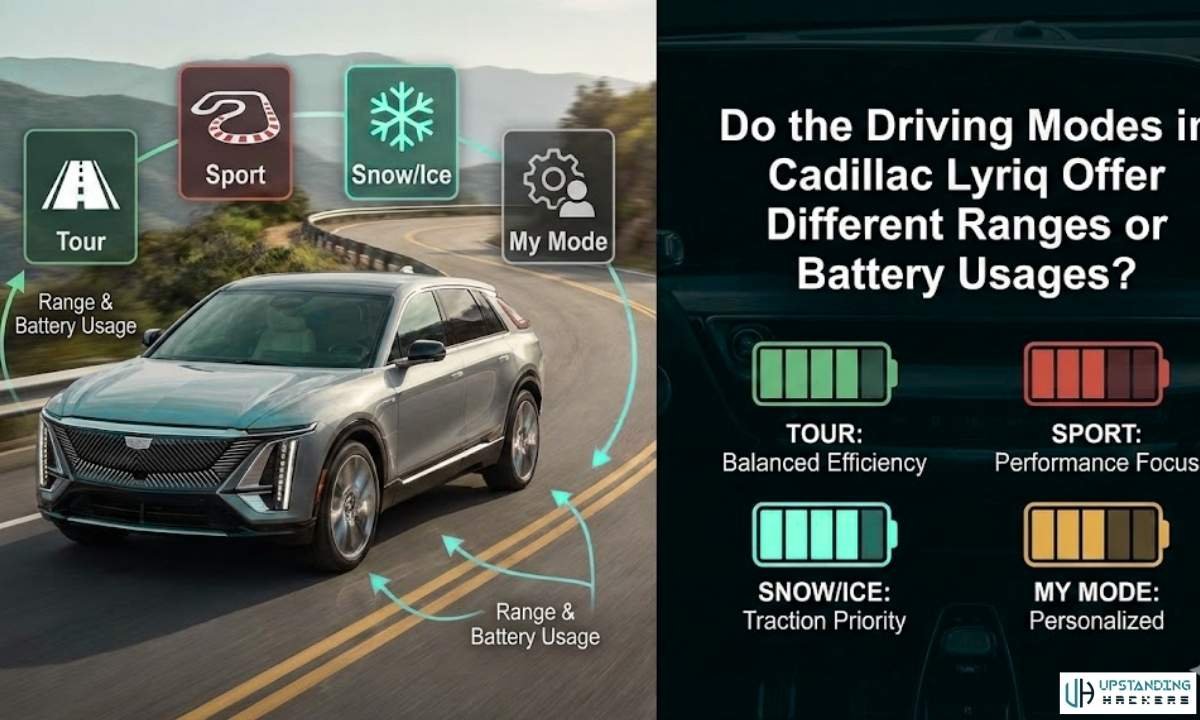
The Cadillac Lyriq offers multiple driving modes that adjust vehicle dynamics, but do they actually change the electric SUV’s range or battery usage? Yes—each mode alters power delivery, regenerative braking, and climate control behavior, directly affecting energy consumption. On a related note, martybhoyyyy: The Rise of a Digital Creator in the UK Music Scene adds useful context
Introduced in 2023 as Cadillac’s first all-electric luxury SUV, the Lyriq features three primary driving modes: Tour, Sport, and Snow. These settings are designed to adapt performance to driving conditions, but they also influence how efficiently the vehicle uses its 102 kWh Ultium battery pack. Public records covering this story are gathered in Driving
How Cadillac Lyriq Driving Modes Adjust Vehicle Systems
Tour mode prioritizes efficiency and comfort, making it the default setting for daily driving. It softens throttle response, reduces regenerative braking intensity, and optimizes climate control for minimal energy draw. This mode is calibrated to maximize range by minimizing unnecessary power consumption.
Sport mode, in contrast, sharpens accelerator response and increases regenerative braking strength. While this enhances driving engagement, it demands more from the electric motor and battery. The system also allows for more aggressive use of accessories like heated seats and steering, which can further drain energy reserves. Public records covering this story are gathered in Do the Driving Modes in the Cadillac LYRIQ Offer Different Ranges or …
Snow mode adjusts traction control and throttle mapping to improve stability on slippery surfaces. It limits initial torque delivery to prevent wheel slip and may activate additional heating elements for the battery and cabin. These adjustments ensure safety but come at the cost of higher energy use.
Each mode communicates with the Lyriq’s thermal management system, which regulates battery temperature. In colder conditions, Snow mode may initiate battery preconditioning, drawing power even when the vehicle is stationary. This proactive heating preserves performance but reduces available range.
Real-World Impact on Range and Battery Efficiency
While Cadillac does not publish official range figures for each mode, real-world testing and owner reports indicate measurable differences. Drivers using Tour mode consistently report longer driving ranges compared to those in Sport or Snow modes under similar conditions.
The difference stems from how each mode manages power flow. In Tour mode, the Lyriq’s software caps peak power output and smooths acceleration curves. This conservative approach reduces instantaneous energy demand, allowing the battery to sustain output over longer distances.
Sport mode unlocks the full potential of the rear-mounted electric motor, which delivers up to 340 horsepower in dual-motor configurations. The increased responsiveness leads to quicker acceleration, but frequent use drains the battery faster. Regenerative braking is also more aggressive, recapturing energy during deceleration—yet the net effect still results in higher overall consumption due to driving style and system demands.
Snow mode’s impact is most pronounced in cold weather. Preheating the battery and cabin before driving can consume several kilowatt-hours before the vehicle even moves. Once underway, reduced torque and heightened traction control further limit efficiency. However, this trade-off is intentional, prioritizing safety over range in hazardous conditions.
Climate control plays a significant role across all modes. The Lyriq uses a heat pump system to improve efficiency, but heating and cooling still account for a substantial portion of energy use. In extreme temperatures, the difference in range between modes can widen, especially if auxiliary systems are active.
What Is Confirmed and What Remains Unverified
These changes directly influence energy consumption patterns.
However, exact range reductions per mode are not officially quantified by Cadillac. Independent tests suggest Tour mode can extend range by a noticeable margin compared to Sport, particularly during highway driving or stop-and-go traffic. Snow mode’s impact varies widely based on ambient temperature and trip duration.
What remains unclear is how much of the range difference is due to driving style versus system-level adjustments. Aggressive driving in Tour mode may still consume more energy than conservative use in Sport mode. Cadillac has not released detailed energy flow data for each mode, leaving some performance aspects to driver observation.
Why Driving Mode Choice Matters for Lyriq Owners
Understanding how driving modes affect range helps Lyriq owners make informed decisions based on their needs. For long-distance travel or maximizing efficiency, Tour mode is the optimal choice. It balances comfort with energy conservation, making it ideal for daily commuting and highway trips.
Sport mode suits drivers seeking a more dynamic experience, especially on winding roads or during overtaking maneuvers. While it reduces range, the performance gain may justify the trade-off for enthusiasts.
Snow mode should be reserved for low-traction conditions. Its energy cost is acceptable when safety is the priority, but using it unnecessarily in dry weather wastes battery capacity.
Ultimately, the Cadillac Lyriq’s driving modes offer more than just a change in feel—they provide tangible differences in how the vehicle uses its battery. By selecting the appropriate mode, drivers can better manage range, performance, and efficiency in real-world scenarios.