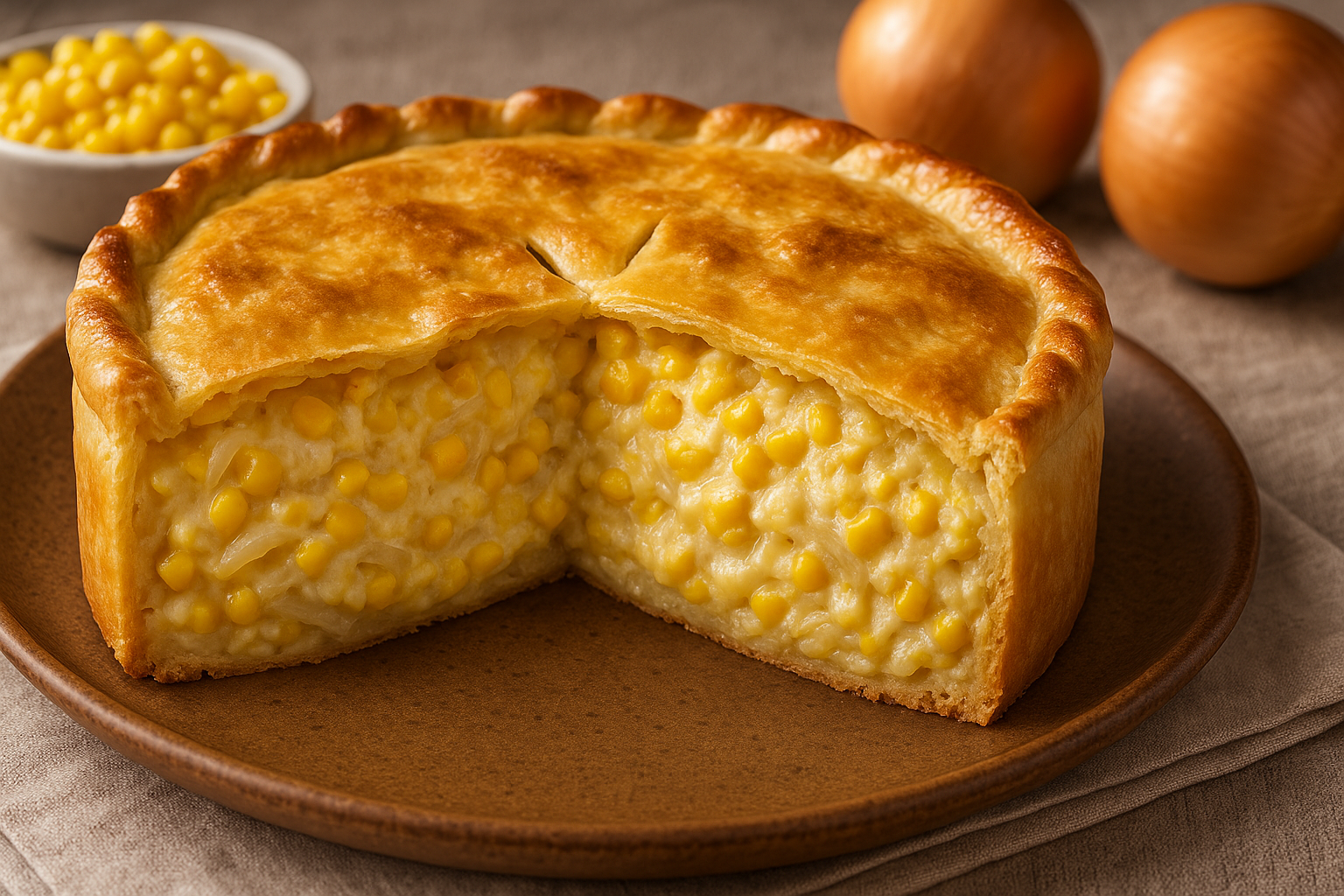
Searching for the best tarta de choclo near me leads to one of South America’s most comforting corn-based dishes. Originating in Peru and Chile, this sweet corn cake combines fresh choclo, sugar, and often a hint of cinnamon or anise into a dense, golden dessert served at family gatherings and neighborhood bakeries alike. Readers exploring best tarta de choclo near me will also find context in Mike Lindell Net Worth: MyPillow Founder's Wealth Explained
Common Misconceptions About Tarta de Choclo That Deserve Clarification
Many people assume tarta de choclo is simply a cornbread variant, but the dish is closer to a custard or pudding in texture. Traditional recipes rely on fresh Peruvian choclo — a large-kernel, starchy corn variety — rather than the sweet corn common in North American supermarkets. According to culinary historians cited in Peruvian food studies, the dish predates European colonization, with indigenous Andean communities preparing early versions using native corn and honey. Another misconception is that it is exclusively Peruvian. Chilean bakeries, particularly in Santiago and the Central Valley, have long produced their own versions, sometimes called pastel de choclo dulce, which tend to be slightly sweeter and topped with a caramelized sugar crust. Some sources also confuse it with humitas, but humitas are savory steamed corn cakes wrapped in husks, while tarta de choclo is baked in a pan and served as a dessert or sweet snack. wikipedia.org/wiki/Galicia_(Spain)” rel=”noopener noreferrer” target=”_blank”>Galicia (Spain)
How Tarta de Choclo Evolved From Andean Kitchens to Modern Bakeries
The roots of tarta de choclo trace back to pre-Columbian Andean agriculture, where corn was a dietary staple cultivated across present-day Peru, Bolivia, and Ecuador for thousands of years. After Spanish colonization in the 16th century, European ingredients like sugar, butter, and cinnamon were incorporated into indigenous corn preparations, gradually shaping the sweet cake recognized today. By the 19th century, written recipes for pastel de choclo appeared in Chilean cookbooks, and Peruvian home cooks developed their own regional variations. The dish became a fixture at festivals, religious celebrations, and Sunday family meals throughout the Andes. In the 20th century, urban bakeries in Lima and Santiago began offering tarta de choclo as a standard menu item, making it accessible beyond home kitchens. Today, the dish appears in Latin American restaurants worldwide, from Buenos Aires to Madrid to cities across the United States with significant Peruvian and Chilean diaspora communities.
How Tarta de Choclo Compares to Similar Corn-Based Desserts Across Latin America
Corn-based desserts exist across Latin America, but tarta de choclo occupies a distinct niche. In Mexico, pan de elote uses fresh corn and condensed milk to create a moister, cake-like texture, while in Colombia, bollos de mazorca are closer to the savory humita tradition. Venezuela’s cachapa, though made from fresh corn, is a thin griddle cake rather than a baked pudding. What sets tarta de choclo apart is its reliance on the specific starchiness of Andean choclo corn, which gives the dessert a grainier, more substantial bite compared to the smoother textures of pan de elote or cornbread. The Peruvian version often includes anise seeds and a layer of dulce de leche or manjar blanco, while Chilean recipes frequently emphasize a caramelized top achieved under a broiler. Both traditions share the core principle of celebrating fresh corn as the star ingredient rather than treating it as a background flavor. com/best-tarta-de-choclo-near-me/” rel=”noopener noreferrer nofollow” target=”_blank”>Best Tarta de Choclo Near Me: Where to Find Fresh and Authentic Flavor
What Is Confirmed About Tarta de Choclo and What Remains Unverified
It is well established that tarta de choclo has roots in pre-Columbian Andean cuisine and that both Peru and Chile claim the dish as part of their national food heritage. What remains less certain is the exact origin point — whether the sweet baked version first emerged in the Peruvian highlands, the Chilean Central Valley, or developed independently in both regions through shared agricultural traditions. Nutritional claims about the dish also vary widely; some sources describe it as a source of complex carbohydrates and fiber due to the whole corn kernels, while others note its high sugar and butter content make it an indulgence best enjoyed in moderation. There is no single standardized recipe, and quality varies significantly between bakeries, home cooks, and restaurants, making any universal claim about its flavor or texture difficult to verify.
| Aspect | Peruvian Version | Chilean Version |
|---|---|---|
| Primary Corn | Fresh choclo (large-kernel Andean corn) | Fresh choclo or pastelera corn |
| Typical Spices | Anise, cinnamon | Cinnamon, sometimes vanilla |
| Texture | Dense, grainy, pudding-like | Slightly sweeter, caramelized top |
| Common Additions | Dulce de leche, raisins | Manjar blanco, sometimes nuts |
Frequently Asked Questions
What is tarta de choclo and how is it made?
Tarta de choclo is a traditional South American dessert made from fresh Andean corn kernels blended with sugar, butter, milk, and spices like anise or cinnamon. The mixture is poured into a baking dish and cooked until golden and set, resulting in a dense, custard-like cake with a distinctly sweet corn flavor.
How many calories does a typical serving of tarta de choclo contain?
Calorie counts vary depending on the recipe and portion size, but a standard slice made with butter, sugar, and whole corn kernels is generally energy-dense.
When did tarta de choclo first appear in written recipes?
Written recipes for pastel de choclo, the Chilean variant, appeared in cookbooks by the 19th century.
Where can I find the best tarta de choclo outside of South America?
Cities with large Peruvian and Chilean diaspora communities — including parts of the United States, Spain, and Argentina — often have bakeries specializing in Andean and Chilean baked goods. Latin American grocery stores and restaurants in these areas are the most reliable places to find authentic versions.
Is tarta de choclo the same as a humita or pastel de choclo?
No, these are related but distinct dishes. Humitas are savory steamed corn cakes wrapped in corn husks, common across the Andes. Pastel de choclo in Chile can refer to either a savory pie filled with meat or the sweet dessert version. Tarta de choclo specifically refers to the sweet, baked corn cake served as a dessert.